The Science behind iTELL
The Science behind iTELL
By Scott Crossley, Chief Innovation Officer
So, we all know that reading a digital text can be heavy work, especially in a learning setting when the content isn't the most scintillating. In these cases, smart readers generally skim the text or just doom scroll until the end, all the while learning little and retaining less. Enter iTELL, a reading framework that uses advanced artificial intelligence to turn reading into a dynamic, back-and-forth conversation between the reader and the text. Instead of asking readers to passively consume text, iTELL uses read-to-write tasks like short-answer questions and summary prompts inside the reading flow, along with AI-mediated conversations, to keep learners engaged and help them retain more information about the content when the reading is finished. How do we know this? Science, of course.
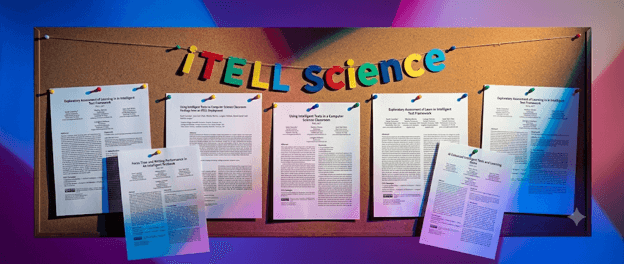
And what does that science tell us? In over 10 peer-reviewed studies, iTELL has been shown to increase reading comprehension, increase productive knowledge of texts, and engage a variety of learners. Specifically:
- Readers using iTELL demonstrate a ~5% increase in learning gains compared to peers using digital textbooks. This is a significant improvement.
- Interactive AI feedback drives meaningful revisions of reader thinking and understanding compared to students working without AI guidance. Readers in iTELL show higher self-explanation skills.
- iTELL trains readers to think more critically, and as a result, students write stronger self-explanations about texts as they move forward in the reading process compared to students who do not receive AI feedback.
- iTELL rewards diligence: slower, more deliberate readers score higher on reading assessments. iTELL helps readers focus on the text and ask the right questions so that the reader's mental model of the text is strong.
- At the same time, iTELL is effective at helping top-tier readers maximize learning gains by providing an interactive environment suited to their use of reading strategies, while introducing lower-skilled readers to those same successful strategies.
One of the best parts about iTELL is that it achieves these gains automatically. A teacher simply uploads a text into the iTELL system, and an interactive text is produced. In doing so, iTELL provides high-quality, instant, individualized feedback to students with minimal human intervention, and gives instructors actionable reports so they can understand the strength of their students, their material, and the learning that occurred. The science shows that turning texts from static repositories of data into responsive learning partners leads to learning gains. iTELL demonstrates that the future of literacy isn't just about reading words — it's about interacting with them.